On April 22, 2026, OpenAI introduced Workspace Agents, Codex-powered AI agents that run inside ChatGPT, connect to Slack, Salesforce, Gmail, and a growing list of enterprise tools, and execute multi-step workflows on a schedule. OpenAI's own framing called them an evolution of GPTs.
The honest version is more pointed. Custom GPTs are being deprecated for Business, Enterprise, Edu, and Teachers accounts. A one-click conversion tool is reportedly on the way. Individual users on Plus, Pro, and Free plans can keep their Custom GPTs for now, but every new feature is shipping into Workspace Agents. Custom GPTs are in maintenance mode.
The August 2026 Rumor
The practical urgency comes from the rumored date: August 2026. OpenAI has not published a clear public shutdown notice for all Custom GPTs, but the rumor is already moving through customer conversations.
The clearest public breadcrumb right now is an r/OpenAI thread about Custom GPTs sunsetting in August. The post says customers are hearing that OpenAI is sunsetting Custom GPTs in August, and a follow-up comment adds that the August date came from three disconnected people, while also noting there is not yet actual official evidence.
We heard August specifically from 3 people, but I haven't been able to find any actual evidence.
That distinction matters. This is not an OpenAI announcement. It is a market signal. If clients are already asking about an August 2026 shutdown, Custom GPTs have stopped feeling like a stable place to build a paid product. The risk is no longer theoretical; the timeline is becoming part of sales conversations, renewal conversations, and migration planning.
If your GPT is part of your offer, your agency deliverable, or your paid product, the move is simple: migrate it to Pickaxe.
What Changed
Workspace Agents are a new architecture for the same idea, with the lock-in made explicit.
The agent lives inside ChatGPT and can't be white-labeled or moved to your own domain. Pricing is credit-based and layered on top of paid workspace plans. And the resale story is gone. Your audience or your agency client has to buy their own ChatGPT seat to access whatever you built.
That's the upgrade. More integrations, more capability, less ownership.
What Custom GPTs Always Were
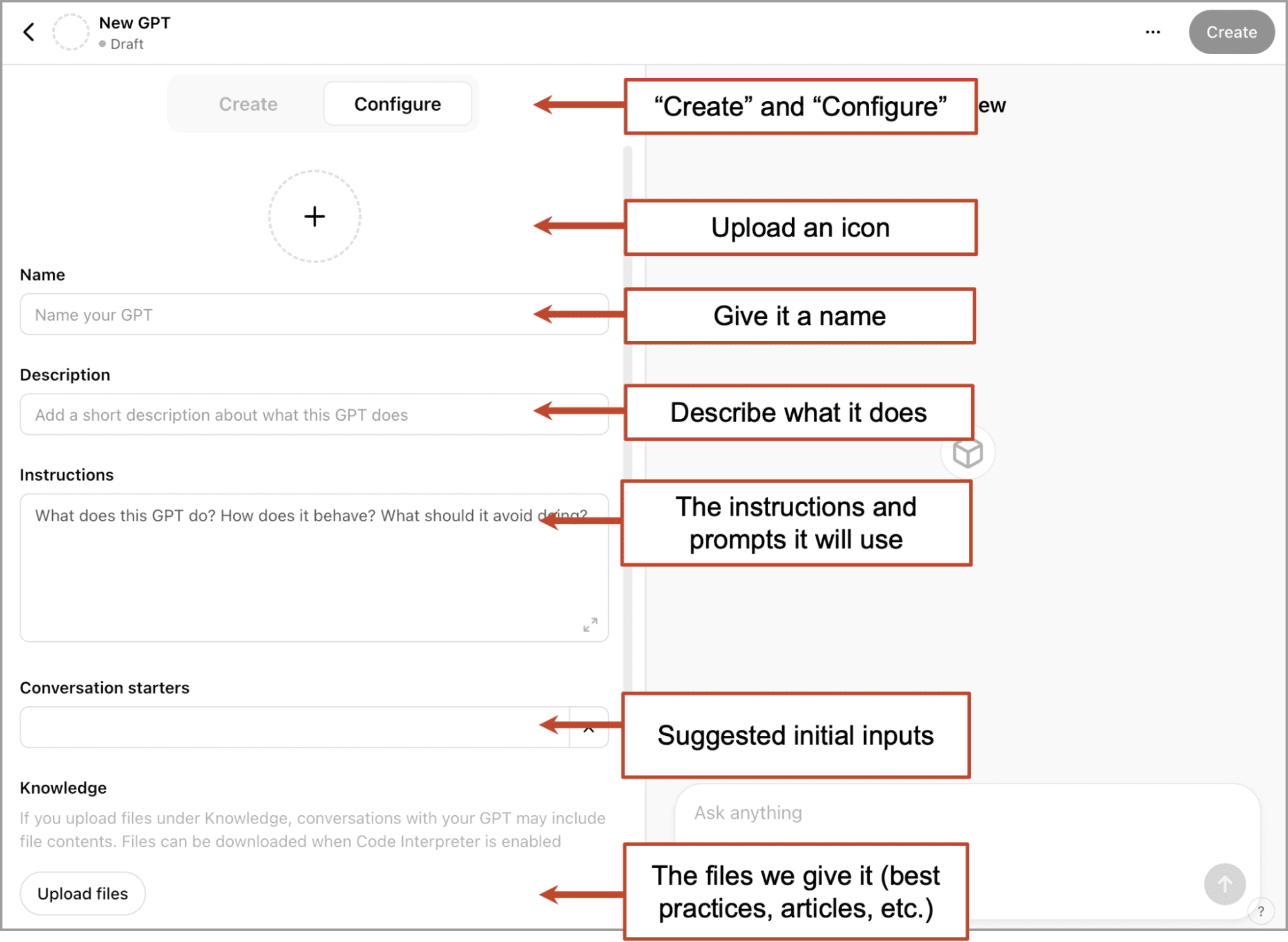
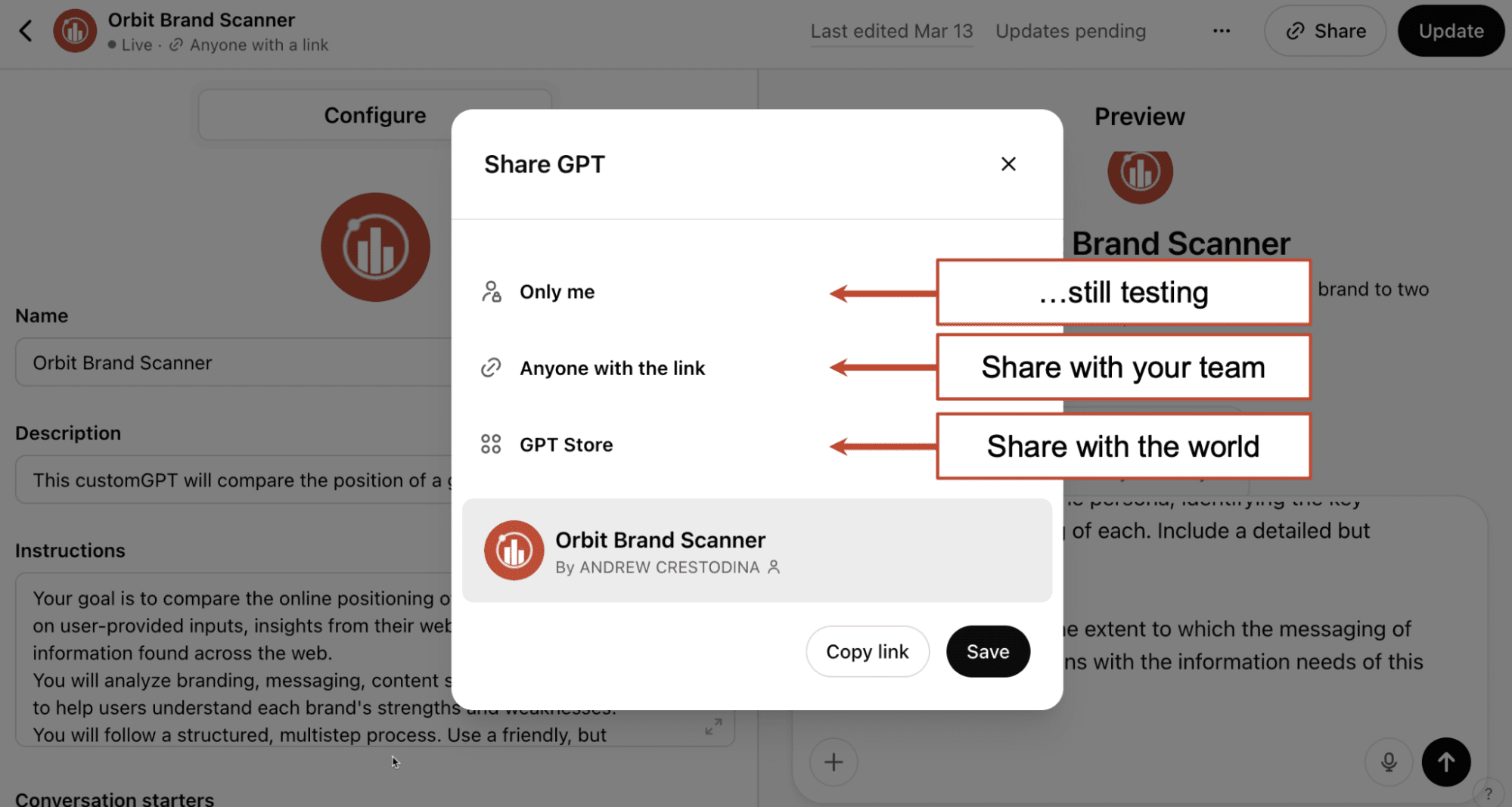
Anyone who built a Custom GPT and treated it as their product was making an assumption OpenAI never confirmed. The Custom GPT lived inside ChatGPT, on OpenAI's runtime, behind OpenAI's login wall. The user was always renting access to a hosted feature.
Workspace Agents make that arrangement honest. The format is more powerful. The dependency is also deeper. Every agency or coach who treated Custom GPTs as a productized layer of their offering now has a forced migration in front of them.
What This Means for Agencies
If you run a marketing agency, especially one serving a vertical niche, and you've been packaging Custom GPTs into your client deliverables, the question worth asking is whether the GPTs are sellable assets or just features of a product you happen to use.
If they live inside ChatGPT, they're features. They're billed by OpenAI, accessible only through ChatGPT, and now on a deprecation timer for Business plans. Your client may be paying you for AI-powered marketing tools, but the actual asset belongs to OpenAI.
That's a fragile foundation for an agency offering.
What This Means for Coaches and Knowledge Experts
For coaches, consultants, framework creators, and educators who built Custom GPTs as part of their digital offering, the problem is the same in different clothes. Your audience can't access your GPTs without their own ChatGPT subscription. The GPT itself is hosted somewhere you don't control. And the format is being phased out.
The work you put into your Custom GPT sits on OpenAI's runtime. When OpenAI changes the format, your asset changes with it. You don't get a vote.
The Migration Path
The obvious move is to get the work out of someone else's runtime and into something you actually own. That's the case for Pickaxe.
A Pickaxe agent does what a Custom GPT does. It runs on a system prompt, accepts conversation starters, references uploaded documents, and returns chat-style outputs. The difference is what surrounds it.
You can white-label the agent under your brand, embed it on your own site, publish it inside a portal, and sell access however you want. The asset belongs to you. The deployment surface belongs to you. So does the pricing model.
The migration itself takes about ten minutes. Paste your GPT instructions into the Pickaxe builder, add your conversation starters, upload or reconnect your reference documents, and pick a model. Turn on web search or actions if the agent needs them. That's it.
From there, you decide where it lives. You can put it inside a Pickaxe portal you sell to clients, embed it on your site, or paywall it as a standalone product. The experience feels like real software instead of a chatbot response because the agent lives inside a product surface you control.
What to Do Now
If you've built Custom GPTs for your clients or your audience, the work is worth keeping. The runtime isn't. If the August 2026 shutdown rumor is right, this is a short migration window, not a someday cleanup task.
Pull the system prompt out of ChatGPT. Save your conversation starters. Save any reference documents you uploaded. Then rebuild the agent in Pickaxe as an AI product you own.
Pickaxe walkthroughs: Pickaxe product walkthrough playlist.
Try Pickaxe: Create a free account.
Building an agent, portal, or paid AI product?
Start building in Pickaxe. Turn your prompt, methodology, files, and workflow into a working product your audience can actually use.